
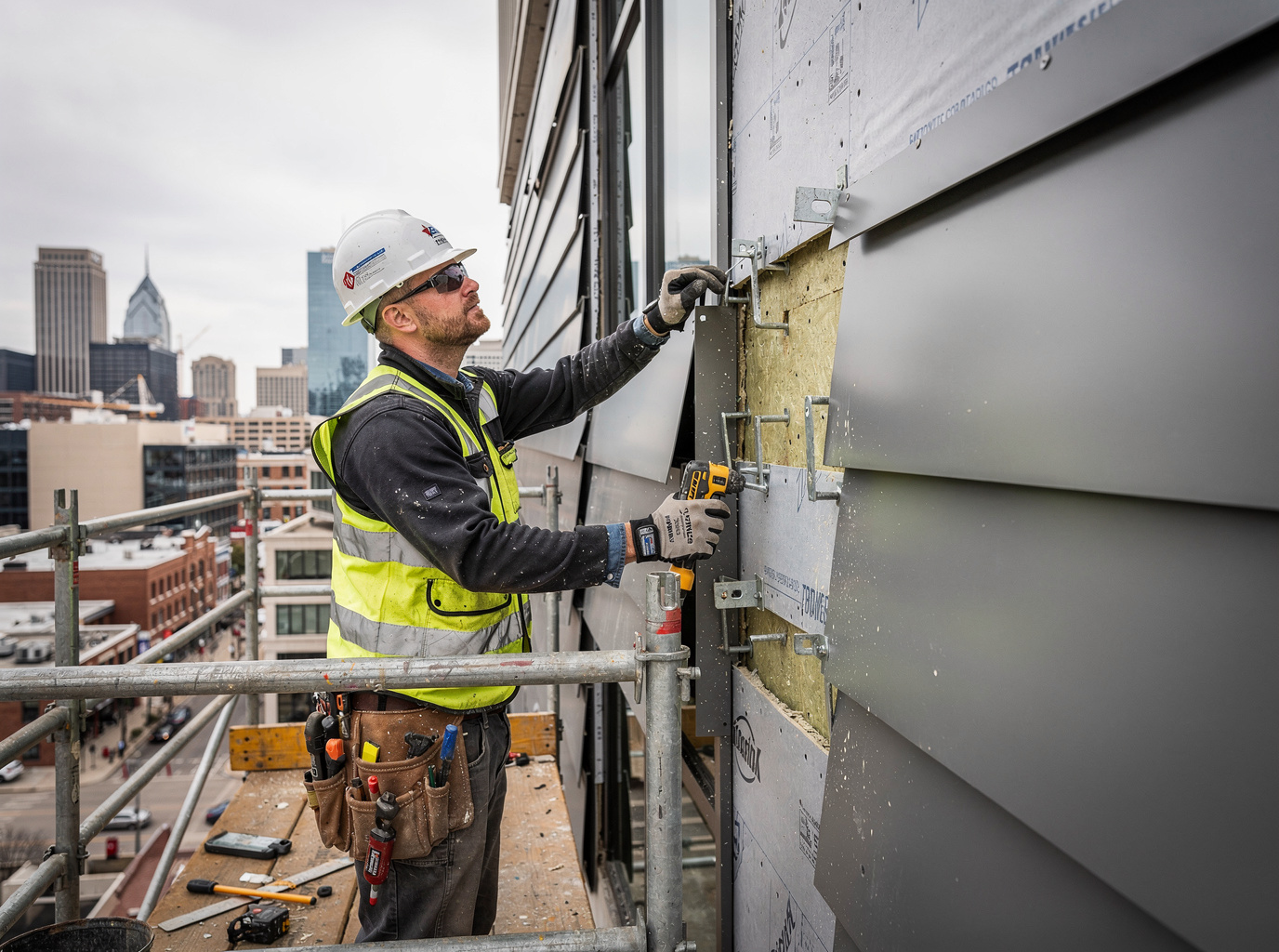
St. Louis commercial buildings in neighborhoods like Downtown, Midtown, and Lafayette Square often feature masonry bases from the early 1900s that require siding systems capable of managing moisture behind the facade. Frequent severe storms drive the need for impact-resistant materials and proper flashing at rooflines and window transitions, especially on structures near the Gateway Arch or along the Mississippi where wind loads increase. Installation crews must account for thermal expansion in metal panels during hot summers and contraction in cold winters to prevent seam failure.
In areas such as The Hill, Tower Grove South, and near Forest Park, many commercial properties sit on sloped lots with clay-heavy soils that shift after heavy rains. This affects attachment points and requires additional blocking or furring strips to keep panels plumb. Local building practices in the Independent City emphasize ventilation behind siding to reduce condensation on brick walls, a detail that becomes critical on two- and three-story retail fronts where interior humidity stays high year-round.
Contractors working on projects in Carondelet or near Union Station routinely inspect for hidden deterioration in wood sheathing exposed to decades of freeze-thaw cycles. Proper underlayment and weep-hole placement prevent water intrusion at grade level, where sidewalk salt and snow melt accelerate corrosion on lower courses. These steps keep the siding system intact through the region's wide temperature swings without relying on unverified performance claims.
Technician insight
In St. Louis the thing that catches most people out with Commercial Siding Installation is how clay soils and steep lots in places like Tower Grove South or near the Missouri Botanical Garden shift foundations enough to pull panels out of alignment if you skip extra blocking at the base.
Retail building on Manchester in Forest Park Southeast
Wind-driven rain had worked behind the old vinyl on a two-story retail building, rotting the sheathing. Inspection showed failed flashing at the second-floor windows. Crews replaced the barrier, added new metal flashing, and installed insulated metal panels. The building now sheds water during storms without interior leaks.
Commercial Siding Installation Services We Offer
✓Metal Panel Installation for Retail Fronts
Installs insulated metal panels on storefronts in Downtown and Central West End to handle wind-driven rain and thermal movement.
✓Fiber Cement Siding for Office Buildings
Applies fiber cement boards on commercial offices near Forest Park Southeast where fire ratings and low maintenance matter most.
✓Vinyl Siding Replacement on Mixed-Use Properties
Replaces weathered vinyl on two- and three-story buildings in Soulard and Benton Park with upgraded profiles that resist hail and UV.
✓Engineered Wood Siding for Historic Commercial Structures
Fits engineered wood on older commercial sites in Lafayette Square while preserving architectural details and improving weather resistance.
✓Insulated Siding Upgrade for Strip Centers
Adds insulated siding systems to retail strips in University City and Clayton to reduce energy loss through older walls.
Commercial Siding Installation Cost in St. Louis, MO
| Service | Typical Range | What Affects It |
|---|---|---|
| Single-story retail storefront | $6,500–$14,000 | Varies with material choice and window count in Downtown or Midtown |
| Two-story mixed-use building | $12,000–$28,000 | Higher when masonry repair or scaffolding is required in Soulard or Lafayette Square |
| Strip-center elevation | $18,000–$45,000 | Depends on linear footage and insulation upgrades near Clayton or Kirkwood |
Ranges are typical for St. Louis, MO and confirmed with an exact written quote before any work starts.
How it works
- 1
Site Evaluation
Measure elevations, inspect substrate condition, and note drainage patterns around buildings in neighborhoods such as Shaw or Carondelet.
- 2
Material Selection
Choose panels and trim rated for St. Louis wind loads and temperature extremes, confirming compatibility with existing masonry.
- 3
Preparation And Flashing
Remove damaged sections, install new weather barriers, and seal transitions at windows, doors, and rooflines.
- 4
Installation And Final Inspection
Hang panels with correct expansion gaps, secure fasteners, and verify drainage before cleanup.
Pricing
Upfront quotes available Mon–Fri 8am–6pm and Sat 9am–2pm based on building size and access.