
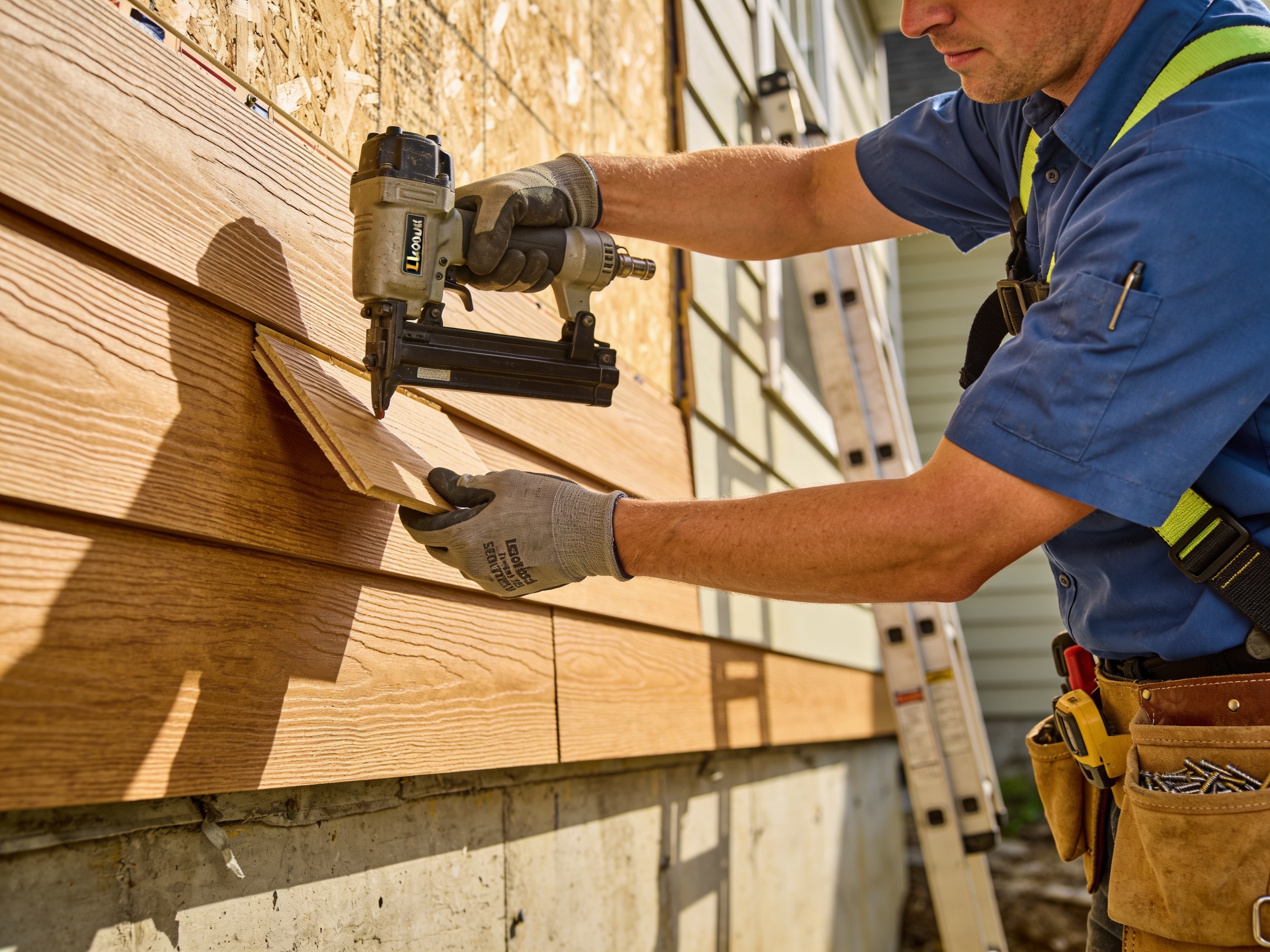
Engineered wood siding performs well on St. Louis homes built before 1940 in neighborhoods such as Soulard and Lafayette Square where brick foundations meet wood framing. The material expands and contracts with the city’s freeze-thaw cycles, so installers leave proper gaps at corners and use manufacturer-approved flashing at window heads to prevent water intrusion during frequent thunderstorms. Hot summers add UV exposure that can fade untreated surfaces, making pre-finished boards with UV inhibitors the practical choice for homes near Forest Park and Tower Grove South.
Older stock in The Hill and Benton Park often has uneven siding planes from decades of settling. Engineered wood installs over furring strips to create a flat plane and allow airflow behind the boards, reducing moisture trapped against sheathing during humid months. Crews check for lead paint on homes in Shaw and Forest Park Southeast before cutting, following local disposal rules that require sealed containment. Severe storm seasons also mean crews secure temporary tarps the same day when removing old siding to protect interiors from wind-driven rain.
Downtown and Midtown conversions from commercial to residential buildings require attention to parapet walls and differing roof lines. Engineered wood must terminate with metal Z-flashing and step flashing at these transitions to shed water away from the structure during heavy downpours. Crews also verify that new siding meets the Independent City’s energy code requirements for air sealing at penetrations before final inspection.
Nearby cities such as Clayton and Webster Groves have similar housing ages but different tree cover that increases shade and moisture retention. Installers adjust ventilation gaps accordingly when working on homes in University City and Kirkwood to keep the engineered wood stable through winter.
Technician insight
In St. Louis the thing that catches most people out with Engineered Wood Siding Installation is skipping the furring strips on older brick homes in Soulard and The Hill. Without that air gap, humidity and freeze-thaw cycles push moisture back into the sheathing during our long winters, and the boards start cupping within two seasons.
Lafayette Square Two-Story Replacement
Homeowner called after wind-driven rain entered through cracked cedar siding on the west wall. We found rotted sheathing behind the original boards and missing step flashing at the bay window. Installed new housewrap, furring, and engineered wood with upgraded flashing; the wall stayed dry through the next three storms.
Engineered Wood Siding Installation Services We Offer
✓Engineered Wood Siding Replacement on Brick Homes
Remove failing cedar or vinyl and install engineered wood over new housewrap and furring on pre-1940 brick homes in Soulard and Lafayette Square.
✓Engineered Wood Siding for Historic District Homes
Match profiles and colors approved for Central West End and Shaw while meeting Independent City guidelines for visible exterior changes.
✓Storm-Damaged Engineered Wood Siding Repair
Replace boards and trim damaged by hail or high winds common in summer storms, focusing on south and west exposures in Tower Grove South and Benton Park.
✓Engineered Wood Siding Installation on Additions
Tie new engineered wood into existing siding on home additions in Carondelet and Midtown with proper flashing to prevent leaks at the junction.
✓Engineered Wood Siding with Insulation Upgrade
Add rigid foam or mineral wool behind new engineered wood during replacement on homes in Forest Park Southeast to improve thermal performance.
Engineered Wood Siding Installation Cost in St. Louis, MO
| Service | Typical Range | What Affects It |
|---|---|---|
| Full siding replacement, single-story home | $8,500–$14,000 | Varies with square footage and window count in neighborhoods like Shaw |
| Full siding replacement, two-story home | $12,000–$19,000 | Higher on homes with complex rooflines in Lafayette Square |
| Storm damage repair section | $1,800–$3,500 | Depends on linear feet affected and access |
| Addition tie-in only | $2,200–$4,000 | Includes flashing and matching profile |
Ranges are typical for St. Louis, MO and confirmed with an exact written quote before any work starts.
How it works
- 1
Site Assessment
Measure elevations, note window and door details, and check sheathing condition on the specific St. Louis home.
- 2
Material Delivery and Prep
Deliver pre-finished engineered wood and install housewrap plus furring strips for drainage and airflow.
- 3
Installation
Hang boards with manufacturer spacing, install flashing at all penetrations, and seal corners against wind-driven rain.
- 4
Final Trim and Cleanup
Install corner boards, caulk joints, and remove debris before walkthrough with the homeowner.
Pricing
Upfront quotes after on-site inspection; final price depends on home size, stories, and condition of existing sheathing.