
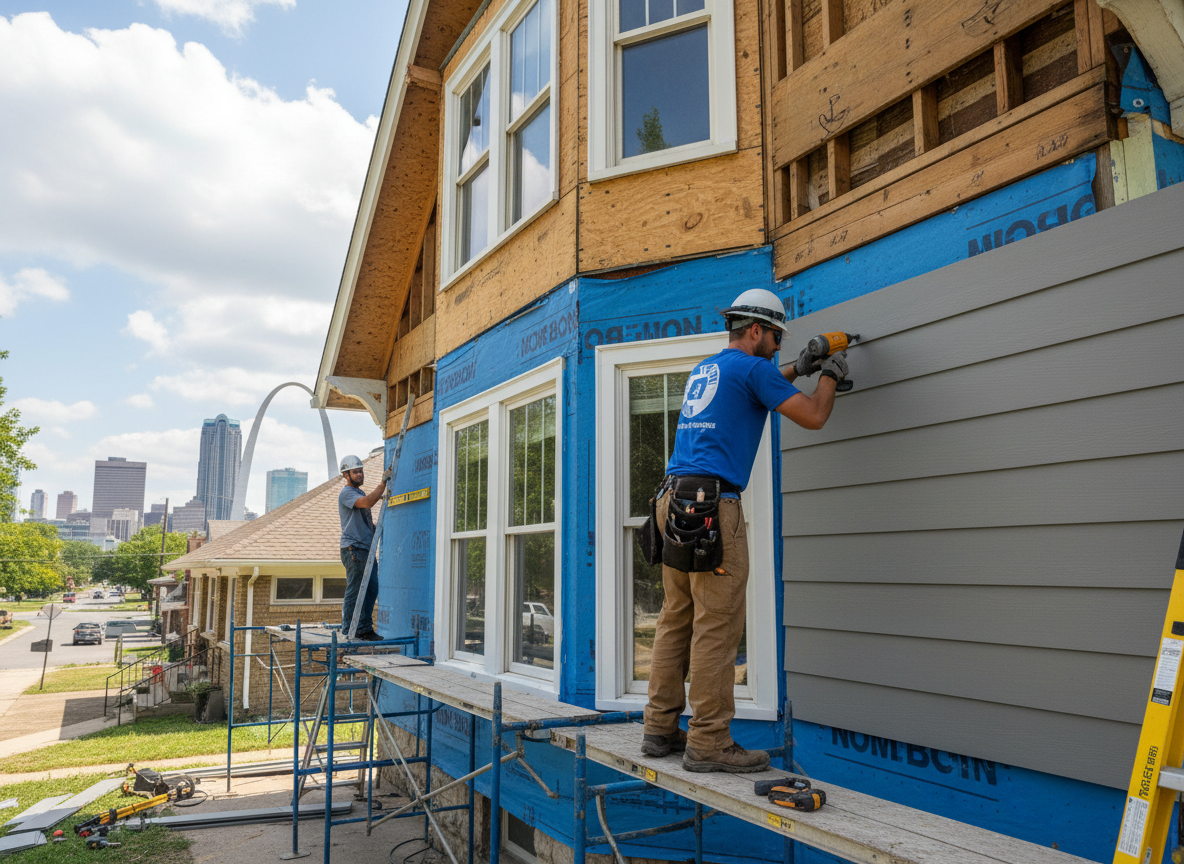
James Hardie siding performs well in St. Louis because the material resists the frequent severe storms and wide temperature swings of the humid continental climate. In neighborhoods like Soulard and Benton Park, many homes built before 1920 have uneven walls and original trim details that require custom flashing and starter strips to prevent water intrusion behind the new boards. Installers must also account for the freeze-thaw cycles that push moisture through any gaps left around windows and doors.
Full-home installations in areas such as The Hill and Shaw often involve removing layers of old wood or aluminum siding before the new HardiePlank can go up. Proper housewrap integration and ventilation behind the siding are critical on two-story homes where attic heat buildup in summer can drive condensation. Crews working near Forest Park or Midtown also watch for lead paint on pre-1978 structures and follow local disposal rules.
James Hardie ColorPlus finish holds color better than field-painted wood in the strong summer sun, but darker shades show chalking faster on south-facing walls exposed to afternoon heat. In Carondelet and near the Mississippi, higher humidity levels make precise caulking at butt joints essential to stop mold growth inside the wall cavity. Homeowners in nearby Clayton and Webster Groves often request matching existing brick or stone accents with Hardie trim boards cut on site.
Technician insight
In St. Louis the thing that catches most people out with James Hardie Siding Installation is the amount of hidden rot behind original wood siding on homes in Soulard and Lafayette Square after decades of freeze-thaw cycles and poor previous flashing. Once we open the walls we often find the sheathing needs replacement before any new fiber cement can go on, which changes both timeline and access on narrow city lots.
Two-Story Home in Tower Grove South
Homeowner called after hail damaged the south wall. We found water had entered around the original windows and rotted the sheathing on the second floor. Replaced damaged sections, installed new housewrap and HardiePlank with upgraded flashing, then matched the existing ColorPlus color on the remaining elevations.
James Hardie Siding Installation Services We Offer
✓HardiePlank Lap Siding Installation
Full elevation or whole-home installation of 8-inch or 12-inch James Hardie planks on wood-frame or masonry homes in St. Louis neighborhoods.
✓James Hardie Trim and Soffit Installation
Replacement of rotted fascia, corner boards, and window trim with matching fiber cement pieces that resist St. Louis winter moisture.
✓Historic District Hardie Siding Installation
Careful removal and reinstallation work on pre-1920 homes in Lafayette Square and Soulard while preserving original window and door profiles.
✓Storm Damage James Hardie Replacement
Targeted panel and plank replacement after hail or high-wind events common along the Delmar Loop and Tower Grove South corridors.
✓James Hardie ColorPlus Color Match Installation
Factory-finished board installation that matches existing colors on homes in Shaw and Forest Park Southeast without on-site painting.
James Hardie Siding Installation Cost in St. Louis, MO
| Service | Typical Range | What Affects It |
|---|---|---|
| Full two-story home James Hardie installation | $12,000–$19,000 | Varies with square footage and number of custom trim pieces in older neighborhoods |
| Single elevation replacement | $3,800–$6,500 | Common after storm damage in Tower Grove South or Benton Park |
| James Hardie trim package only | $2,200–$4,100 | Fascia, corners, and window wraps on brick homes |
| Historic district compliance work | $1,500–$3,000 | Added detailing required in Lafayette Square and Soulard |
Ranges are typical for St. Louis, MO and confirmed with an exact written quote before any work starts.
How it works
- 1
Site Assessment
Measure all elevations, note existing siding condition, and check for rot or water damage on homes in Central West End or Downtown.
- 2
Material Selection
Choose plank width, texture, and ColorPlus finish suited to the home's age and exposure to severe storms.
- 3
Wall Preparation
Remove old siding where needed, install new housewrap, and add furring strips for drainage on older St. Louis frames.
- 4
Installation And Detailing
Hang planks with proper overlaps, install pre-finished trim, and seal all joints against freeze-thaw cycles.
- 5
Final Walkthrough
Review every elevation with the homeowner and schedule any touch-up work during business hours.
Pricing
Upfront written quotes provided Mon–Fri 8am–6pm, Sat 9am–2pm. Price depends on home size, stories, and access.