
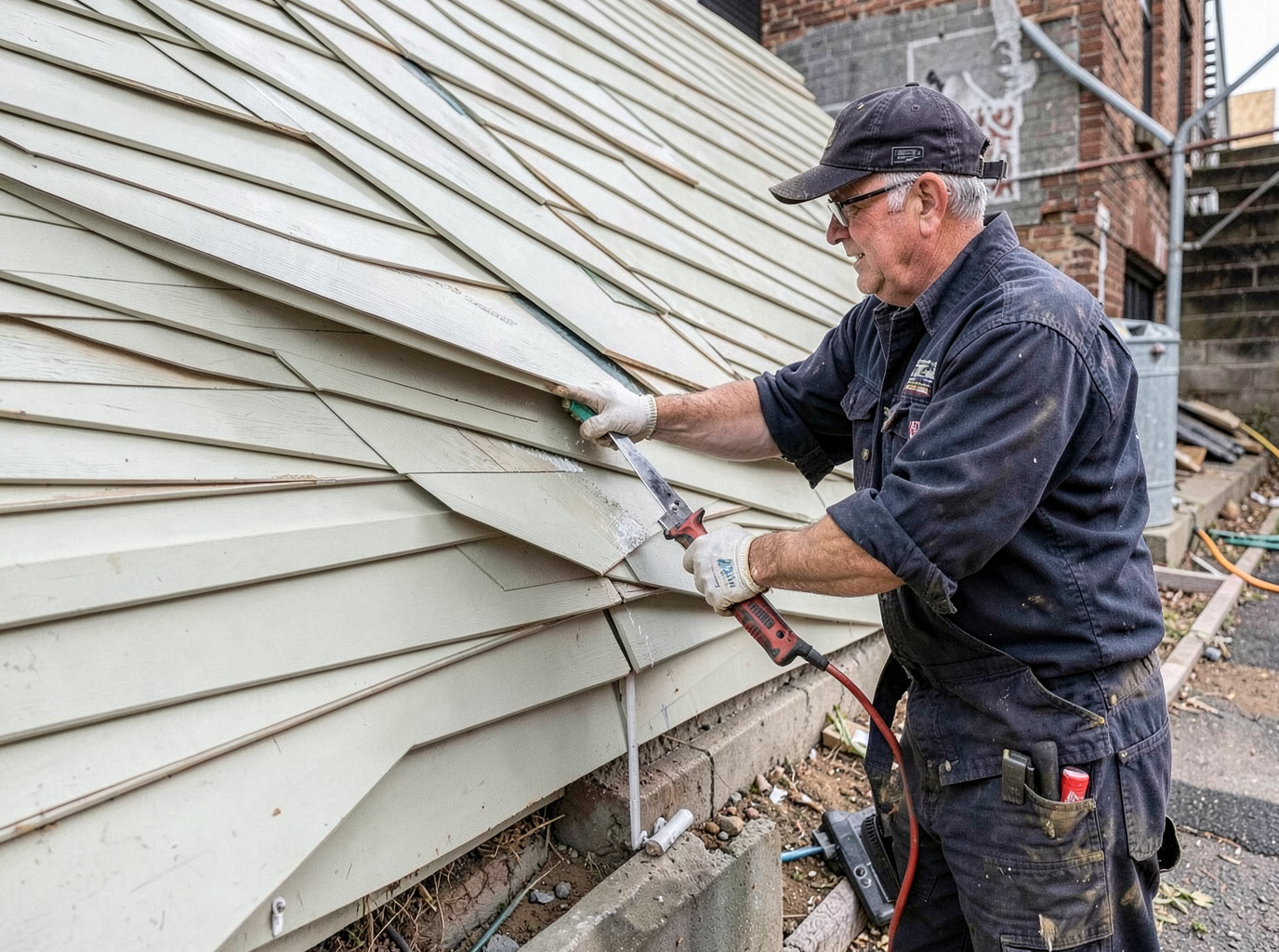
St. Louis homes in neighborhoods such as Soulard, Benton Park, and Lafayette Square often date to the late 1800s and early 1900s with brick exteriors that shift slightly over decades. Vinyl siding replacement here requires removing old layers without damaging the underlying brick or sheathing, then installing proper housewrap and furring strips so moisture can escape during humid summers and frequent severe storms. Skipping these steps leads to trapped water behind the new panels once winter freezes arrive.
Tower Grove South and Forest Park Southeast feature a mix of two-story frame and brick homes where wind-driven rain from Midwest storms commonly finds gaps around windows and corners. Replacement crews must pay extra attention to J-channel and corner trim details because vinyl expands and contracts more than the original wood or aluminum in hot summers and sub-zero winter nights. Homeowners in these blocks notice buckling within two seasons when installers skip proper gapping at ends.
Downtown and Midtown conversions from commercial to residential often carry different wall assemblies than single-family homes in Shaw or Carondelet. Vinyl siding replacement on these buildings needs heavier gauge panels and closer fastener spacing to withstand the wind tunnels created by nearby high-rises and the open river corridor. Crews also check for outdated insulation levels that make temperature swings inside the walls more extreme once new siding is installed.
Technician insight
In St. Louis the thing that catches most people out with vinyl siding replacement is the way severe storms drive rain sideways into the gaps around older brick foundations in neighborhoods like Soulard and Benton Park. If you do not add furring and proper drainage plane the new panels trap moisture that then freezes and pushes everything loose the first cold snap.
Tower Grove South Two-Story Replacement
Homeowner called after a line of severe storms tore several panels loose on the west elevation. We found water had reached the sheathing behind the original vinyl on a 1920s frame house. Removed the damaged section, added new housewrap and furring, then installed heavier gauge vinyl with sealed trim. Home has stayed dry through the next two storm seasons.
Vinyl Siding Replacement Services We Offer
✓Vinyl Siding Removal
Complete tear-off of existing layers on older St. Louis homes so new vinyl installs flat against properly prepared sheathing and housewrap.
✓Storm-Damaged Panel Replacement
Targeted replacement of panels cracked or loosened by severe thunderstorms common in the independent city and nearby suburbs like Webster Groves.
✓Insulation Upgrade During Replacement
Addition of rigid foam or batt insulation behind new vinyl to improve performance on older frame homes in The Hill and Shaw during cold winters.
✓Window and Door Trim Integration
Proper flashing and trim work around openings to prevent wind-driven rain intrusion on two-story homes in Central West End and Lafayette Square.
✓Gutter and Downspout Coordination
Reattachment or extension of gutters after vinyl installation so water is directed away from foundations in low-lying blocks like Carondelet.
Vinyl Siding Replacement Cost in St. Louis, MO
| Service | Typical Range | What Affects It |
|---|---|---|
| Full vinyl siding replacement on two-story home | $9–$14 per sq ft | Price varies with panel thickness, number of corners, and condition of existing sheathing on older St. Louis homes. |
| Storm damage panel replacement only | $4–$8 per sq ft | Limited to affected sections; full elevation work raises cost when matching older faded vinyl. |
| Insulation added during replacement | $1.50–$3 per sq ft | Rigid foam upgrade price depends on wall depth and access on brick or frame homes. |
Ranges are typical for St. Louis, MO and confirmed with an exact written quote before any work starts.
How it works
- 1
Site Assessment
Measure all elevations, note existing wall conditions, and check for rot or water intrusion common on St. Louis brick and frame homes.
- 2
Material Selection
Choose panel thickness and color suited to hot summers and freeze-thaw cycles while matching neighborhood aesthetics in Soulard or Benton Park.
- 3
Removal and Prep
Tear off old siding, install new housewrap and furring, and address any sheathing issues before new panels go up.
- 4
Installation and Trim
Hang vinyl with proper expansion gaps, install trim around windows, doors, and corners, then verify drainage paths.
- 5
Final Walkthrough
Review every elevation with the homeowner and confirm all fasteners and flashings are secure before leaving the job.
Pricing
Upfront written quotes provided after on-site assessment. Hours: Mon–Fri 8am–6pm, Sat 9am–2pm.