
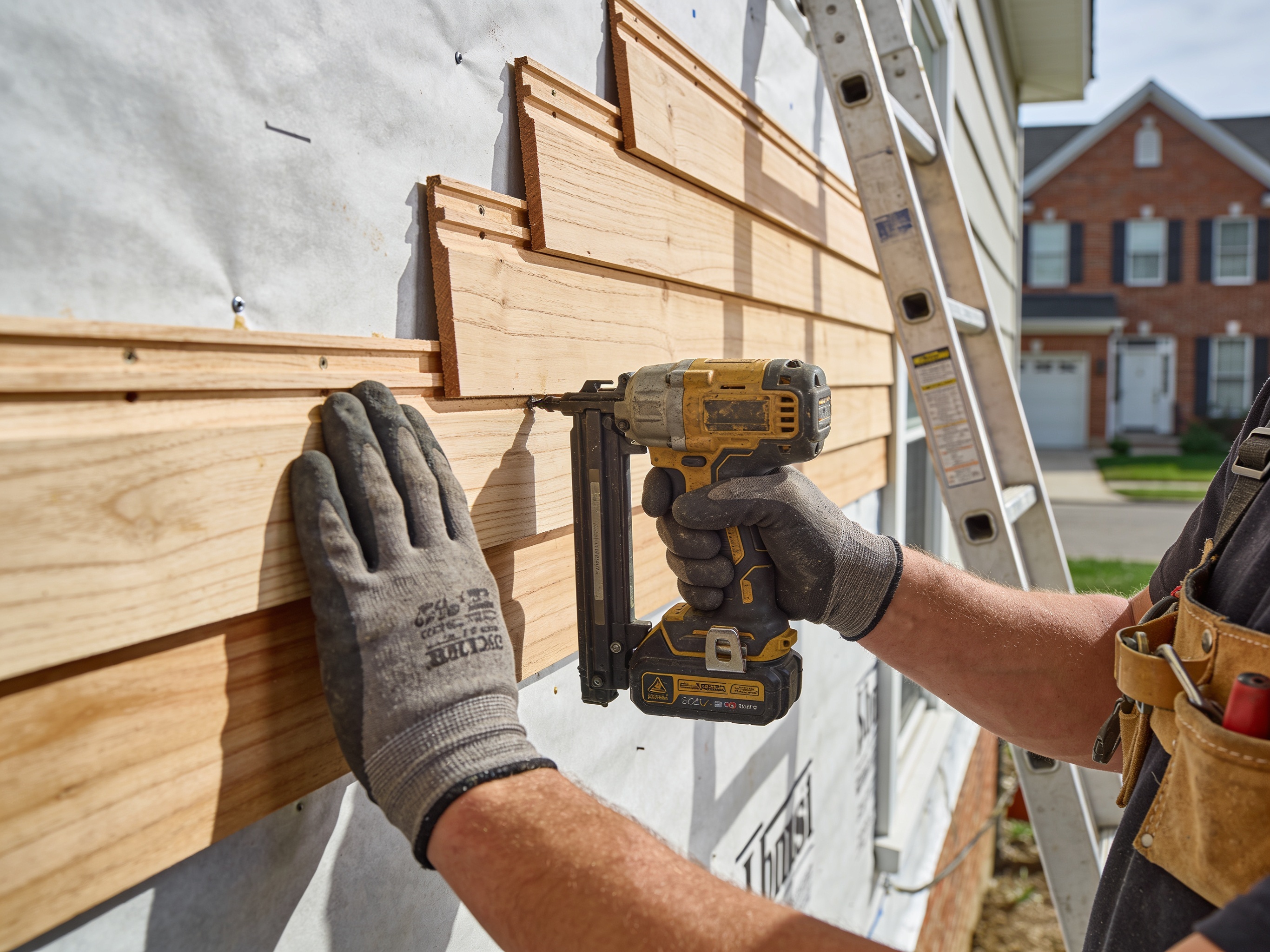
St. Louis homes in neighborhoods like Soulard, Lafayette Square and The Hill often date to the late 1800s and early 1900s, with irregular framing and multiple layers of existing siding that must be addressed before new wood goes up. Proper removal prevents trapped moisture that leads to rot, especially when summer humidity meets cold winter snaps. Installers check for lead paint on pre-1978 structures and use house wrap rated for the region’s frequent severe storms.
Cedar and pine are common choices here because they handle the humid continental climate, but they still require back-priming and gap spacing to allow expansion during hot summers. In areas near Forest Park or Tower Grove South, mature trees drop debris that can trap water against lower courses, so installers add extra flashing at transitions. Wind-driven rain from Midwest storms makes proper nailing patterns and caulk selection critical on exposed elevations.
Downtown and Midtown rehabs often involve tight access and historic district rules that limit visible fasteners, while homes in Carondelet or Benton Park sit on sloped lots where drainage must be corrected before siding reaches grade. Crews schedule around the short spring and fall windows when temperatures stay moderate enough for wood movement to stabilize before sealing.
Technician insight
In St. Louis, the thing that catches most people out with Wood Siding Installation is how quickly moisture gets trapped behind new wood on pre-1920 homes in neighborhoods like The Hill when old tar paper is left in place during humid summers followed by sudden freezes.
Soulard Two-Story Replacement
Homeowner noticed buckling cedar on the west wall after repeated spring storms. We found two layers of original siding plus failed felt paper trapping water against the sheathing. Removed all layers, installed new wrap and furring, then applied pre-primed cedar with expanded gaps at the base to improve drainage on the sloped lot.
Wood Siding Installation Services We Offer
✓Cedar Siding Installation
Select-grade cedar installed with proper back-priming and ventilation gaps to resist St. Louis humidity and winter moisture.
✓Pine Siding Installation
Knot-free pine applied with stainless fasteners and storm-rated house wrap for homes in areas like Shaw and Forest Park Southeast.
✓Wood Siding Over Brick
Furring strips and new wood cladding added to brick homes in Soulard and Lafayette Square without trapping moisture behind the original wall.
✓Historic District Wood Siding
Period-correct profiles and hidden fastener methods used on homes in The Hill and Central West End subject to local review.
✓Wood Siding Replacement After Storm
Full or partial replacement following hail or wind damage common in Benton Park and Tower Grove South.
Wood Siding Installation Cost in St. Louis, MO
| Service | Typical Range | What Affects It |
|---|---|---|
| Cedar siding installation | $9–$16 per sq ft | Varies with profile, access on two-story homes, and storm-rated flashing needs. |
| Pine siding installation | $7–$13 per sq ft | Lower cost option; price rises with custom milling for historic districts. |
| Full tear-off and disposal | $2–$4 per sq ft | Required on multi-layer homes common in Soulard and Benton Park. |
| Additional flashing and trim | $800–$2,200 | Depends on window count and roofline complexity in older stock. |
Ranges are typical for St. Louis, MO and confirmed with an exact written quote before any work starts.
How it works
- 1
Site Assessment
Measure elevations, check existing layers, and note drainage around homes in older neighborhoods like Soulard.
- 2
Material Selection
Choose wood species and grade suited to St. Louis freeze-thaw cycles and severe summer storms.
- 3
Preparation And Wrapping
Remove damaged layers, install rated house wrap, and correct flashing at windows and transitions.
- 4
Installation And Sealing
Apply siding with correct spacing, back-prime edges, and seal all joints before final coat.
Pricing
Upfront quotes provided after on-site review of home access and existing conditions.